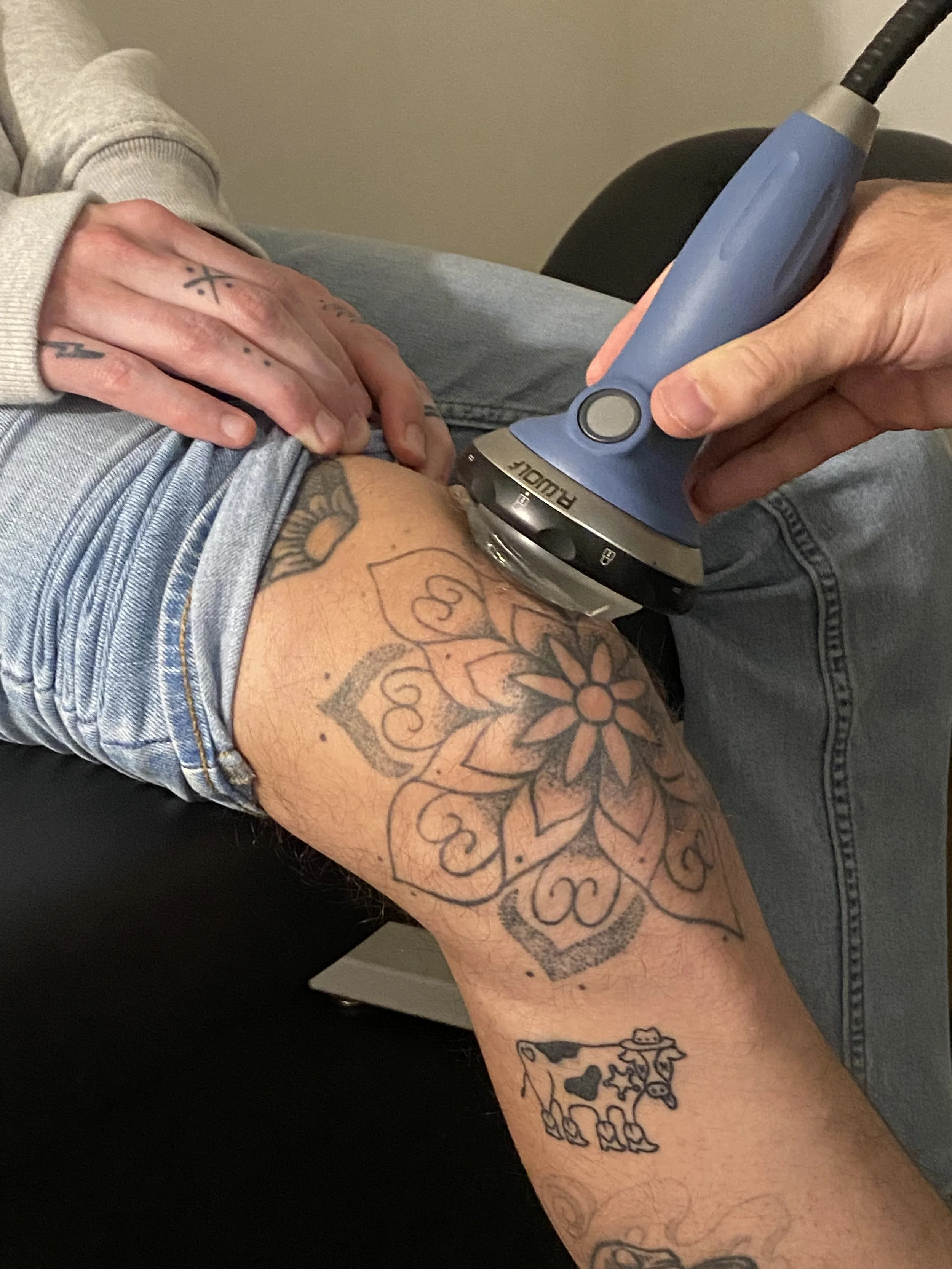
Extracorporeal Shockwave Therapy (ESWT) in Nashville
Shockwave therapy is a treatment option used to support tissue healing and recovery for certain musculoskeletal conditions. At Nashville Chiropractic + Sports Therapy, shockwave may be recommended after a provider evaluates your condition and determines whether it is a good fit.
This therapy is often used for stubborn tendon and soft tissue problems that have not fully responded to rest, exercise, or traditional care alone.
Conditions Shockwave Therapy May Help
Shockwave therapy may be used for tendinopathies, plantar fasciitis, certain cases of low back pain, and other soft tissue conditions where the goal is to stimulate a healing response and improve function.
Your provider will consider your diagnosis, symptoms, activity goals, and overall treatment plan before recommending shockwave.
What to Expect
Appointments are scheduled after a provider determines that shockwave is suitable for your concerns. Treatment is typically paired with a plan that may include therapeutic exercise, load management, chiropractic care, or performance training.
The goal is to help you return to activity and fitness with stronger, more resilient tissue.
Frequently Asked Questions
Do I need an evaluation before shockwave therapy?
Yes. Shockwave is recommended after a provider evaluates your condition and determines whether it fits your diagnosis, tissue irritability, and goals.
What conditions can shockwave therapy help with?
Shockwave may be considered for tendon-related pain and stubborn soft tissue conditions, including plantar fasciitis, Achilles or patellar tendon irritation, tennis elbow, and other tendinopathies. Your provider will confirm whether it makes sense for your case.
What does shockwave therapy feel like?
Most people feel repeated pulses or tapping over the treatment area. It can be uncomfortable over sensitive tissue, but the intensity can be adjusted during the visit.
How does shockwave therapy work?
Shockwave uses acoustic pressure waves to stimulate a local tissue response. The goal is to support healing, reduce pain, and improve function in tissue that has been slow to recover.
Will shockwave replace rehab exercises?
Usually no. Shockwave is most useful when it supports a broader plan that addresses strength, mobility, load tolerance, and the activity demands that contributed to the problem.
How many shockwave sessions will I need?
The number of visits depends on your condition and response to care. Your provider will discuss a plan after your evaluation and adjust it based on progress.
Can I stay active during shockwave treatment?
In many cases, yes, but activity may need to be modified. Your provider will help you decide what to continue, what to scale back, and how to build back safely.