What is Listeria, and Why Can't I Have Jeni's Ice Cream?

jenisicecream

Listeria monocytogenes is a bacteria that is the causative agent for the disease listeriosis.  Although rare, listeriosis can be very problematic primarily for pregnant women, newborns, adults with weakened immune systems, and the elderly.  At a fatality rate of 20%, listeriosis should not be taken lightly.  Listeria infections are usually contacted from eating contaminated food and most often cause sepsis and meningitis (inflammation of the brain and spinal cord.)  

Jeni's Ice Cream recently found listeria colonies in some of their ice cream.  Unfortunately for them it wasn't just one batch, and they have had difficulty narrowing down the exact cause.  So, to prevent potentially infecting their customers with a deadly pathogen they decided to close shop until they can effectively eliminate the source.  

Although it's starting to get warm out and everyone wants their favorite boutique ice cream, we should be thanking Jeni for avoiding the risk.  Also, I hear Jeni's is still paying their employees although they are closed.  That's pretty cool of them.  

HOW SANTA CAN PROTECT HIS BACK THIS CHRISTMAS

Dear Santa,

Does your back hurt from Ho Ho Hauling all those toys around?  Have all the milk and cookies made you a little top heavy?  Well, I think I can help.  I’ve been watching plenty of Christmas movies and I’ve noticed that you don’t quite have the best lifting form.  I have a few recommendations that might help lessen your après-noel backache.

First off, put a dang strap on that bag of yours.  I mean come on man, its 2014.  Don’t you think the elven technology is advanced enough to sew on a couple backpack straps, or how about an Osprey backpack with a built in frame?  And Santa, try switching it up a bit.  I know you’re right handed, but maybe you should sling that heavy sack over your left shoulder every once in a while.

Secondly, when delivering the goods, try to practice proper lifting and squatting technique.  I’ve stayed up late and have seen how you rush to put those heavy presents under the tree.  Take a little time Santa, you’re magic and you have all night.

Here are a few pointers:

  • The first act of squatting should be tilting your hips forward and sticking your jolly ‘ole butt backwards.  This puts the spine in a better position to hold your body weight plus the weight of that Xbox One (hint hint).
  • Your weight should be centered over your heels, not your toes.  This maintains your balance and allows you to keep a safer center of gravity.
  • Get low.  Drop your butt down to at least knee level.
  • Before you pick that toy-pack up and zip out the chimney, look up.  Looking up before lifting something heavy will help prevent rounding of your back and allow you to safely stand up with all that weight.

Last but not least, maybe pass on some of the cookies.  You’re supposed to be jolly, we get it, but a little core work and a few less sweets can take away some of that anterior weight you’ve been toting around.  The more your body weight pulls you forward, the harder it is to have proper lifting technique.  Also, I know how much you like Property Brothers on HGTV.  So you know the new trend is to be minimalist.  Not everyone has chimneys, and if they do, they don’t always have a huge traditional one for you to shimmy down.  And what about gas fireplaces?  You might have to squeeze through a window sometimes.  Just remember, a slender Santa is an efficient Santa.

So there you go, Big Guy.  I hope this helps.  You’ve got a busy, stressful night ahead of you.  Follow these steps and maybe you won’t need all of those 364 days to recover.


CHIROPRACTIC TREATMENT DURING PREGNANCY

Should you see a chiropractor if you are pregnant?

Easy answer.  YES!  As any woman who has had a child can tell you, your back hurts when you are pregnant.  Pregnancy is a very stressful time for the body, especially the low back, mid back, and pelvis.  First of all, you gain a good deal of anterior weight.  There is another person in there.  That alone is enough to throw things out of whack.

As the abdomen expands and gets heavier, the lumbar spine begins to curve more than normal causing the muscles around the spine to become tighter in an attempt to balance out the stresses.  Visiting a chiropractor can help address these issues and teach you how to cope with your new, temporary body.

Probably the most common spine-related problem with pregnancy is lack of motion of the pelvis.  The joint that connects your pelvis to your tailbone (the sacroiliac or “SI” joint) tends to lose some of its normal motion with pregnancy as the pelvis starts to expand to adapt to the growing fetus.  These joints are crucial for proper pelvic mobility before, during, and after delivery.  Regular chiropractic adjustments during pregnancy can help keep joints mobile and prevent a lot of issues such as pain, intrauterine constraint, and abnormal fetal positioning.

Further, there are muscles that act on the the hip and pelvis that can get extremely tight and cause shooting nerve pain, numbness, and/or tingling down the leg during pregnancy.  By working to stretch these muscles and doing at-home exercises, these symptoms can be managed or even prevented.

Is chiropractic care during pregnancy safe?

Absolutely!  Obviously we aren’t going to just lay you on your stomach and jump on you as hard as we can when you are about to pop.  There are a variety of ways a chiropractor can treat pregnant women that is safe for both the mother and the baby.

With the trending shift towards alternative medicine and more natural treatment choices, many healthcare providers are finding local chiropractors to refer their pregnant patients to.  If you are pregnant or plan on becoming pregnant seek out a chiropractor or consult your other healthcare providers about the benefits of chiropractic.


CHRONIC HEADACHES: CAUSES, PREVENTION, AND INTERVENTIONS

Chronic headaches have become an epidemic, especially with our American culture.  I see countless patients who complain of several headaches per week.  What do most of them have in common?  Desk jobs.  Nashville is a huge healthcare industry hub, and a high percentage of the population spends a lot of time at a desk, in a car, or on the phone.  These activities commonly lead to TENSION HEADACHES.

So what causes these tension headaches?  Our nerves are what carry our pain signals.  The sensory nerves that innervate the top, sides, and back of the head exit the spinal cord between the base of your skull and the top of the neck.  There are several muscles in there called “suboccipital muscles” that, when tight, can irritate these nerves leading to a headache.

Tension headaches are often caused by chronic poor posture.  Common posture problems leading to headaches include:  slouching of the shoulders, forward head carriage, and looking down at computers or phones.  Slouching leads to the shoulders rolling forward.  This leads to over activity of the pec muscles and inactivity of the muscles that hold the shoulder blades together.  When the shoulders are forward the neck moves forward and gravity acts on the head leading to straightening of the normal neck curvature.  This causes the suboccipital muscles to work harder to keep your head upright.  Overactivity of the suboccipital muscles causes tightness, irritation of nerves, and, ultimately, headaches.

How do you treat headaches?  Typically headaches respond well to chiropractic adjustments.  The goal of treatment is to improve spinal mobility in the affected region and the address muscular imbalances and posture abnormalities that may lead to headaches.  The first step is to restore motion.  Next, typically a chiropractor will show you some in-office or at-home exercises that you can do to help stabilize the changes that have been made.  Finally, the doctor will address causative factors and help develop a plan for future headache prevention.

So what about migraines?  Migraines are typically treated with medication and prevention measures.  They are often triggered by external factors and/or food sensitivities.  By addressing common food triggers and external stimuli, many migraines can be prevented; thus, negating the need for the medication.  Proper spinal mobility and muscle tone can especially help with migraine prevention.  Oftentimes tension headaches can lead to migraines in those who are affected by migraines.

The goal of this post is to raise awareness of headaches and encourage people to seek out a qualified physician to address their issues.  No headaches are normal.  Do not assume that your headaches are just a part of you.  Find a good chiropractor to treat your headaches.  You may be surprised!

SACROILIAC JOINT DYSFUNCTION

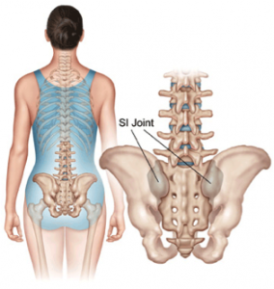
Sacra-ila-what?  This joint, once thought to be immobile, is a key player in low back pain and sciatica-like symptoms.  Sacroiliac joint dysfunction is a condition that, in many, can go undiagnosed.  If missed, this condition can lead to improper management and unnecessary medical costs, or even unnecessary low back surgery.

The sacroiliac joint (SI joint) is the joint that is made where the pelvis and the sacrum meet.  This joint is crucial for walking as it has to shear back and forth.  If the SI joint becomes fixated the muscles of the back and glutes will be overloaded with the task of extending the low back and trail leg as you walk.  Further, due to most of our jobs as Americans requiring prolonged sitting, glute muscle deterioration is very common.  As a result of SI dysfunction and lack of glute strength, the muscles of the low back have to work much harder and become fatigued leading to chronic low back tightness and increased risk of injury.  

Symptoms of sacroiliac joint dysfunction can include low back pain, glute pain, groin pain, thigh pain, and pain on the outside of the leg.  These symptoms are either a result of improper SI joint mobility itself or secondary symptoms due to improper function.  Further, the piriformis muscle may become tight leading to sciatica-like symptoms.  This muscle runs right next to the sciatic nerve.  If it becomes tight it can irritate the nerve leading to pain, numbness, tingling, and/or weakness of the lower extremity.

So what should you do if you think you might be suffering from this condition?  As a chiropractor, I believe in exhausting conservative treatment options before considering injections or surgery.  In most cases manipulation, passive modalities, and exercise can significantly decrease the symptoms associated with sacroiliac joint dysfunction.  Your chiropractor can assess the joint’s integrity and provide treatments that improve its mobility.  SI joint steroid injections are very common and can provide some benefit to the patient.  However, these do not address the root cause of the pain or why the patient started experiencing the pain in the first place.

The best course of action is to first attempt treatment with a chiropractor to see if your specific condition can be managed conservatively before opting for any irreversible treatments.